The Profumo Affair (1963): The British Minister's Affair with a Model That Rocked Harold Macmillan's Government
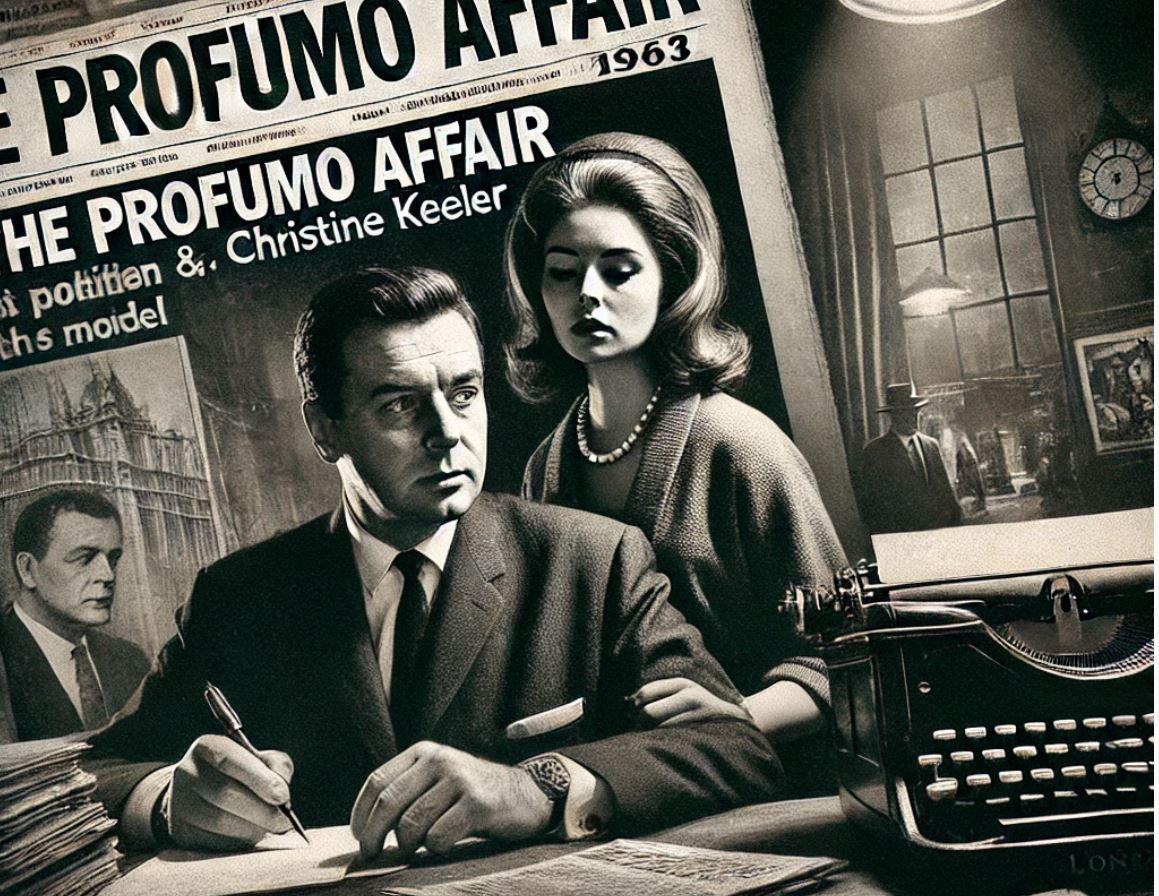
In the early 1960s, Britain was shaken by one of its most sensational scandals – an affair that unravelled the lives of ministers and spies alike. It’s called the Profumo Affair, involving John Profumo, the British Minister for War and his secret relationship with model Christine Keeler. This scandal not only rocked Harold Macmillan’s government but also exposed the darker undercurrents of British society during a time of post war optimism.
Keeler’s entanglements with both Profumo and a Soviet diplomat set the stage for a political earthquake that reverberated through Whitehall. The affair became a tragic mix of politics, sex and espionage. It left careers destroyed and lives forever changed.
Let’s uncover this real story of the Profumo Affair that stunned a nation and forever altered the course of British political history.
Who is John Profumo?
John Profumo was a prominent British politician and a key figure in the Conservative Party during the 1950s and early 1960s. Born in 1915, he came from a wealthy and influential family, with his father being a baronet. Profumo’s career in politics began in 1940, when he was elected as the Member of Parliament for the Hampstead constituency. His early work in Parliament focused on defense issues and he quickly gained a reputation as a dedicated and ambitious politician.
In 1955, Profumo was appointed Minister of State for War under Prime Minister Harold Macmillan’s government, a role that placed him at the forefront of British defense policy during the Cold War. His tenure was marked by his strong commitment to modernizing the British military. He made sure the country is secure in the face of growing tensions with the Soviet Union. Profumo was also known for his involvement in various charitable and social initiatives, particularly his work with young people.
Although his career was tragically derailed later in life, John Profumo’s earlier years in politics were marked by significant achievements and he was seen as a rising star within the Conservative Party. Despite the later controversies, his early political legacy reflects a man dedicated to serving his country.
Who is Christine Keeler?
Christine Keeler was a British model and showgirl who became a prominent figure in the 1960s, largely known for her striking beauty and captivating presence. Born on February 22, 1942, in Uxbridge, England, she grew up in a working class family and had a challenging childhood. Despite early setbacks, including living in foster care, Keeler's ambition led her to a career in modeling and acting. She quickly gained attention for her looks, securing work as a dancer and model in London's West End.
Keeler also became well known in social circles, often associating with influential figures in arts, politics and entertainment. She was a frequent presence at fashionable London clubs and events. Beyond her modeling career, Keeler had a keen interest in acting and appeared in several films and television shows, though her acting career was not as notable as her time in the public eye for her beauty and connections.
Throughout her life, Christine Keeler was regarded as a symbol of the swinging 60s, an era marked by cultural change and social revolution. Though her personal life often overshadowed her career, she remained a key figure in British pop culture. Keeler wrote an autobiography and spent years later advocating for women's rights and social justice.
The Affair
The Profumo Affair began in 1961 and captivated Britain’s political and social landscape of the 1960s. It centered on John Profumo, the British Secretary of State for War and his affair with Christine Keeler. The affair began when Keeler, who was in her early twenties, met Profumo at a party. This party was hosted by osteopath Stephen Ward who was also connected to various influential figures. K
Keeler was at the time romantically involved with another man, the Soviet naval attaché Yevgeny Ivanov, but she and Profumo quickly began an affair. The affair remained secret for several months, but things began to unravel in 1963 when a series of events linked to the affair came to light. Keeler’s involvement with Ivanov was seen as a potential security risk, especially during the height of the Cold War.
In March 1963, Profumo was forced to deny the affair in the House of Commons, stating that he had not had any improper relations with Keeler. However, after investigations and public pressure, Profumo admitted in June 1963 that he had lied to Parliament. He resigned from his government post and withdrew from public life.
The Fallout: Effects On Harold Macmillan’s Government
The Profumo Affair had a huge impact on Harold Macmillan's government. In the early 60s, Macmillan's Conservative Party was facing growing political pressure, but the scandal exposed the weaknesses within the establishment and severely undermined public trust. John Profumo’s affair with Christine Keeler, combined with his lying to Parliament, struck at the heart of political integrity.
Macmillan, who was Prime Minister at the time, faced significant fallout. Though Profumo's resignation was expected, the ensuing scandal revealed a network of deceit and dishonesty, damaging the credibility of the entire Conservative government. It brought to light the proximity of senior ministers to scandalous personal behavior and questionable associations, especially in the case of Profumo’s connections with figures like Stephen Ward, a man who had links to both high society and the world of espionage.
After the scandal broke out Macmillan's reputation took a blow. His leadership was questioned and he was unable to regain the public’s confidence. Although he was not directly involved in the affair, the crisis led to a loss of political authority and it exacerbated an already existing sense of complacency within his government.
The scandal signaled the decline of the Conservative Party’s dominance and played a role in the eventual 1964 Labour victory, which saw Harold Wilson become Prime Minister. The Profumo Affair also showed the changing dynamics of post war Britain, where traditional values were being questioned.
Stephen Ward’s Role in the Profumo Affair
Stephen Ward was an osteopath, artistand socialite whose role in the Profumo Affair has been largely overshadowed by the scandal’s more prominent figures. Born in 1912 in Hertfordshire, Ward's early life was marked by his father’s status as a clergyman, which allowed him to attend public school. However, his academic struggles led him to seek an alternative path, eventually studying osteopathy in Missouri. Ward’s luck changed in the post war years when he gained a reputation in London for treating high profile patients, including Winston Churchill and members of the aristocracy.
In 1950, Ward’s social circle expanded when he befriended Bill Astor, a former MP, who introduced him to elite circles. This relationship allowed Ward access to the upper echelons of British society, including politicians, royals and celebrities. His medical practice and artistic talents furthered his connections, enabling him to mingle with powerful individuals. Despite his success in these worlds, Ward was not bound by the strict class structures of society, embracing a "classless" existence. His home was a gathering spot for a wide range of people, often including young women, some of whom became involved in the Profumo scandal.
Ward’s connections with Christine Keeler and other women at the center of the affair ultimately led to his downfall. After John Profumo resigned, Stephen Ward was arrested and charged with procuring women and living off immoral earnings. His trial at the Old Bailey was a public spectacle. While Ward wasn’t a pimp, the prosecution tried to make it seem like he was. Christine Keeler and Mandy Rice Davies both admitted to accepting money and gifts from men they had sex with, some of which they gave to Ward for rent and food. This was enough for Ward to be convicted.
During the trial, none of Ward’s wealthy friends came to his defense, despite him once being part of their social circle. His lawyer, a friend and patient of Ward, was outmatched by the prosecutor. As the trial dragged on, Ward became emotionally crushed. Unable to cope with the stress, he overdosed on sleeping pills and left notes for his close friends.
Ward fell into a coma before the verdict was announced and died in the hospital before he could be sentenced. At his funeral, only six people attended. A simple wreath of white carnations from writer Kenneth Tynan read: "To Stephen Ward, Victim of Hypocrisy."
The Impact
The impact on John Profumo was profound. His political career, once promising, was destroyed and he spent the rest of his life in relative obscurity. He had to resign, which he did on 4 June 1963. However, despite the scandal, Profumo later found redemption through his charitable work, particularly in the East End of London.
Christine Keeler’s reputation was also severely affected. She was vilified in the press and faced public scrutiny. Keeler’s life after the affair was marked by a mix of public attention and personal struggle. She was portrayed as a seductress and a symbol of the excesses of the time, but she later sought to redefine herself. Keeler wrote an autobiography and spent years advocating for women's rights. While she faced difficulties, she ultimately sought to move beyond the scandal and become known for her own achievements, including her later work as a writer and advocate.
Overall, the Profumo Affair had lasting repercussions particularly in British politics, where it exposed the vulnerability of public figures and the potential for scandal to destroy careers. It also highlighted issues of class, gender and the role of women in society during the swinging 60s.
The Profumo Affair’s Legacy
The Profumo Affair marked a turning point in British politics and society. After the scandal, John Profumo’s resignation symbolized the collapse of the political establishment’s once sturdy image. He died at the age of 91 but we still remember his dirty deeds to this day. This event highlighted the growing divide between the traditional, conservative values of the older generation and the rapidly changing social norms of the post war era. The affair exposed not just the personal moral failures of those involved but also revealed the shifting tides of public opinion about power, privilege and accountability.
In the aftermath, the Profumo Affair led to a broader discussion about the role of the media, the public’s right to know and the transparency expected from those in power. For many, the scandal was a wake up call, forcing Britain to confront uncomfortable truths about class, sexualityand political integrity. It also hastened the decline of deference to authority, as the public began to demand more from their leaders, further accelerating the social and cultural changes already in motion. The Profumo Affair, therefore, played a key role in shaping the future direction of British society in the 1960s and beyond.
Wrapping Up
The Profumo Affair remains one of the most significant political scandals in British history. It ended the career of a prominent politician and exposed the complex interplay of power, privilege and secrecy at the highest levels of society. Through the involvement of John Profumo, Christine Keeler, Mandy Rice Davies and Stand Ward, the affair brought to light the moral contradictions within the establishment.
The scandal served as a catalyst for societal shifts, challenging the rigid moral standards of the time and accelerating the cultural changes of the 1960s. It forced Britain to confront uncomfortable truths and signaled the decline of old societal norms. In many ways, the Profumo Affair helped shape modern British politics and left a lasting legacy on the relationship between the public and their leaders.
Sources:
- https://www.cbc.ca/news/world/john-profumo-centre-of-1963-british-scandal-dies-at-91-1.578612
- https://www.businessinsider.com/the-profumo-affair-2012-11
- https://www.historyextra.com/period/20th-century/real-history-profumo-affair-christine-keeler-who-what-happened/
- https://en.wikipedia.org/wiki/Profumo_affair#:~:text=The%20Profumo%20affair%20was%20a,Christine%20Keeler%20beginning%20in%201961.