Marlene Dietrich, bisexual goddess of sex
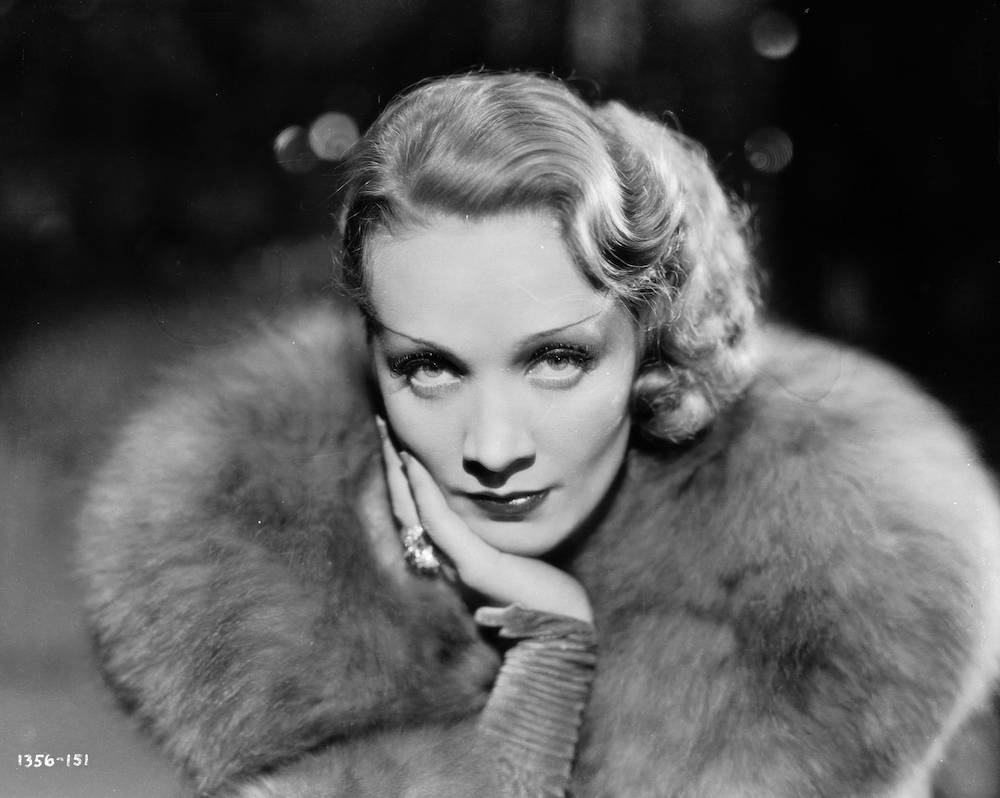
Throughout film history, there have been amazing and beautiful women who have graced the screen and captured the hearts of their fans. Sex kittens, good girls, wild childs, madonnas, and whores have all used their beauty and unmistakable sexual appeal to wow moviegoers and secure roles of a lifetime for themselves. But very few women have been as iconic as Marlene Dietrich. She is one of the greats, up there with Marilyn Monroe and Elizabeth Taylor. Her life is truly an inspiration, especially to those in the LGBTQ community. She was not the type of woman to let someone stop her from doing what she desired.
Young life and her beginnings
Marlene Dietrich, on December 27th, 1901, was born in a neighborhood of Berlin, Germany. Her name at birth was actually Marie Magdalene Dietrich. Her mother was Wilhelmina Josephine, and her father was Luis Eric Otto Dietrich. He worked as a police lieutenant. She also had a sister named Elisabeth, who was one year older than her. Her family was one of modest means, but they lived comfortably. Throughout her childhood, she went by her nickname Lena, which was given to her by her family. Her father died when she was just turning six years old. Later on, she had a stepfather who was once the best friend of her late father. Their marriage was shortlived because he died when Marlene was 15, because of injuries due to World War 1.
When she was in school, she learned to play the violin, and she became interested in theater as well. Although she was unable to get a job as a violinist because of a wrist injury, she did become a chorus girl and performed in Vaudeville style shows and dramas. The Vaudeville shows would be her first-ever job, and she got them in 1922.
Her first true role and her career
While working as a chorus girl, she kept practicing drama and trying to audition in different silent films. Then, in 1923, she got a small part as a lady’s maid in The Little Napoleon. After this, she performed in several silent films until she finally got her big break out role in 1930, which was called Blue Angel, and she played a cabaret singer called Lola Lola. This film was made by the director Josef Von Sternberg, and she went on to make several more movies with him until 1935.
During her time with Von Sternberg, she was in the movies Dishonor, Shanghai Express, Blonde Venus. In 1933 she worked with another director and made the romantic drama movie Song of Songs, then, later on, she acted in The Scarlet Empress and The Devil is a Woman.
Around 1937 the Nazi party tried to offer her mo act in their movies, but she vigorously declined. She renounced her German citizenship and left for the United States. She became an American and created a fund to help Jewish people flee the Nazis.
When she moved to the US, she went back to Paramount and made another movie called Angel. It didn’t do well, and she had to wait two more years until another breakout role came for her. This movie would be called Destiny Rides Again.
Life as a bisexual woman
During her time in Berlin as a 20-somethings woman, she was able to partake in the new but still hidden gay see. She would even participate in the drag balls. She was also not fond of gender roles and actively defied them whenever she could. When a Turkish boxing ring in Berlin opened up to women, she immediately joined and began to train as a boxer. In many of her films, she would make her characters have an androgynous form, even though it wasn’t obvious to the audience at the time.
She married her husband Rudolph Sieber in 1923, who was an assistant director at the French Paramount Pictures. But before and during her marriage, she had many lovers. Quite a few of them didn’t know about her other lovers until the tabloids ran stories about Marlene’s newest beau. But her husband was never kept in the dark; he knew about all of her affairs and would even give her advice and comment on them. No one knows for sure, but when she was around the age of 24 she began to date Greta Garbo, who was a popular Swedish actress in the twenties and thirties. They were supposed to be rivals, constantly battling for the same roles in films, but their comments on each other suggested that they were lovers. Marlene even commented on Greta’s underwear.
She had several different fairs with both men and women, including John Wayne Frank Sinatra, Mercedes de Acosta, and possibly Greta Garbo. There were even some rumors that said she had entered into the marriage of Errol Flynn and his wife as both of their lovers.
When she moved to America and began to take part in Hollywood, she made sure to being involved in its secret bisexual and lesbian circles. She also filmed one of the first gay kisses in the film Morroco.
Retirement and Death
She finally retired from acting in Hollywood in the 1970s and decided to live a quiet and isolated life. In 1992, she passed away from kidney failure while she was in her apartment in Paris. Her funeral had thousands of attendees and even ambassadors from different countries, including Russia and the UK. She was buried in Berlin nearest her family’s gravesite.
Conclusion
Bisexual women have always existed. Many people believe that it is a new fact that has come about in the 60s, but we know that to not be true. There are many stories of LGBTQ people defying all odds and becoming staples of power and inclusivity in whatever part of history they lived in. Marlene was always dedicated to being her true self, and in whatever fashion, she saw fit. She didn’t shy away from female romances even though she was a megastar during her time in films. We are sure that it must not have been easy, but sometimes you just can’t hide from the world and uphold what others believe is normal. We can write so much about Marlene Dietrich that it can fill up volumes of books, but this article hopefully captures some of the spirit that was uniquely her.